Ask anyone who’s just landed a job in the UAE and they’ll tell you the same thing: the salary looked great until they saw the rent. That’s usually the moment the Dubai vs Sharjah question comes up, because the two cities sit right next to each other, share a border and a commute, and yet feel completely different on your bank statement at the end of the month.
I’ve watched friends make this choice in both directions — some moved to Sharjah to save aggressively, others moved back to Dubai within a year because the daily commute wore them down. So instead of giving you a one-line answer, let’s walk through what each city actually costs, category by category, and who each one genuinely suits.
A quick note before we start: prices below are typical ranges as of early 2026. Rents in the UAE move quickly, so treat these as a realistic guide, not a quotation.
The Short Answer
Sharjah is meaningfully cheaper — mostly because of rent. Housing in Sharjah can cost 40–60% less than a comparable place in Dubai, and since rent is the single biggest expense for almost everyone in the UAE, that gap drives everything else. But Sharjah’s savings come with trade-offs: the commute, fewer entertainment options, and stricter rules around lifestyle. Whether the trade is worth it depends entirely on how you live.
Rent: The Category That Decides Everything
What you’ll pay in Dubai
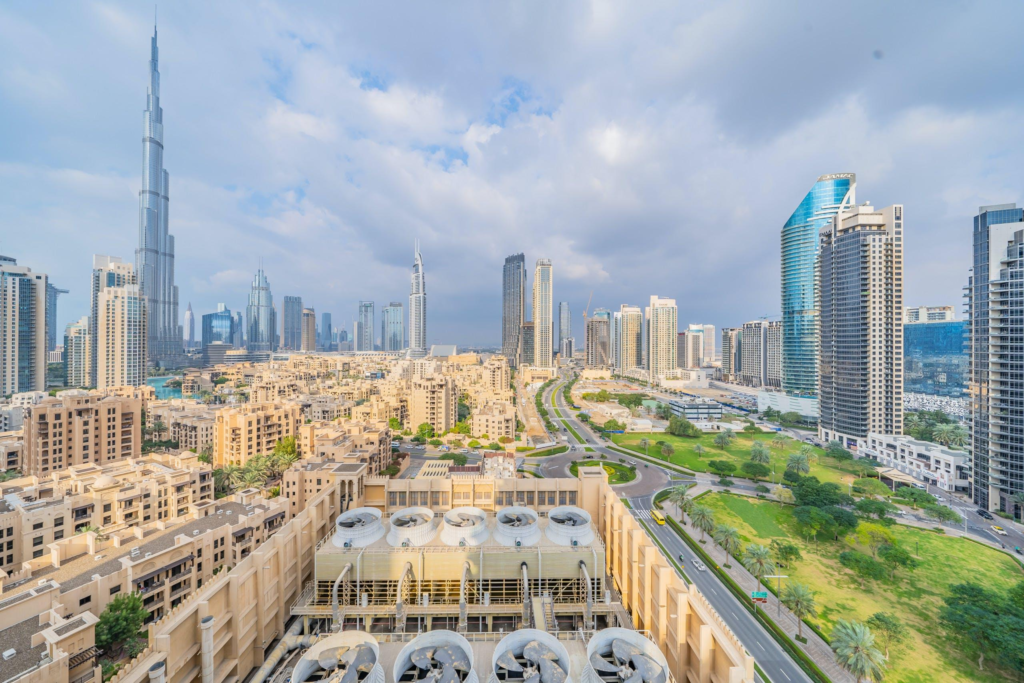
Dubai rent varies wildly by neighbourhood. A one-bedroom apartment in Dubai Marina or Downtown typically runs somewhere between AED 90,000 and 130,000 a year. Move out to communities like JVC, Al Nahda (Dubai side) or International City and you can find one-bedrooms in the AED 50,000–80,000 range. Families looking at two- or three-bedroom apartments in mid-range areas should budget AED 100,000–160,000 a year, and villas go well beyond that.
What you’ll pay in Sharjah
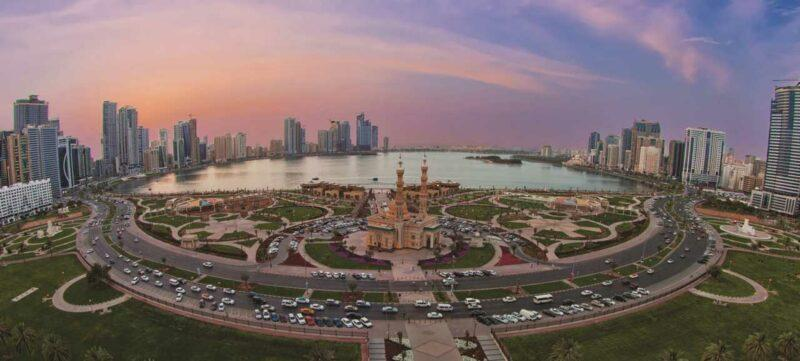
This is where Sharjah wins, and it isn’t close. A one-bedroom in popular areas like Al Nahda (Sharjah side), Al Majaz or Al Taawun generally falls between AED 28,000 and 45,000 a year. Two-bedrooms often land in the AED 40,000–65,000 range — roughly what a studio costs in central Dubai. Newer communities like Aljada offer modern finishes and facilities while still undercutting Dubai significantly.
For a like-for-like apartment, expect to pay roughly half in Sharjah. On rent alone, a family can save AED 50,000+ per year.
Utilities and Bills
Dubai residents pay DEWA for electricity and water, plus a housing fee of 5% of your annual rent, spread across monthly bills — a cost many newcomers forget to budget for. A typical one-bedroom’s monthly DEWA bill lands around AED 400–700 depending on the season (summer air conditioning is merciless in both cities).
Sharjah uses SEWA, and monthly bills tend to be a bit lower in absolute terms, partly because rents (and therefore housing-linked fees) are lower. Internet and mobile plans cost the same across the UAE — figure AED 300–400 a month for decent home internet — so there’s no real difference there.
Verdict: Sharjah is cheaper, but utilities won’t make or break your budget the way rent does.
Transport: Sharjah’s Hidden Cost
Here’s the honest part every “Sharjah is cheaper” article should include: if you live in Sharjah and work in Dubai, the commute is your rent discount’s price tag.
The Dubai–Sharjah corridor is one of the busiest in the country. A drive that takes 25 minutes at 2 pm can take over an hour during peak times. That means:
- Fuel: more of it, every single day. Petrol is cheap by global standards, but a long daily commute still adds AED 400–700 a month for many drivers.
- Salik tolls: Dubai’s road tolls add up if your route crosses toll gates daily.
- Time: the cost nobody puts in a spreadsheet. Ten hours a week in traffic is real money in disguise.
If you live and work in the same city — either one — transport is manageable. Dubai has the Metro, which is clean, cheap and reliable; a monthly public transport pass costs far less than running a car. Sharjah relies more on buses and taxis, so most Sharjah residents end up needing a car.
Groceries and Eating Out
Supermarket prices are broadly similar — the same chains (Carrefour, Lulu, Union Coop and others) operate in both emirates, and a monthly grocery bill for a couple typically runs AED 1,500–2,500 either way.
Eating out is where Dubai stretches your wallet. Dubai’s restaurant scene is world-class and priced accordingly: a mid-range dinner for two can easily hit AED 250–400. Sharjah has excellent, genuinely affordable dining — especially South Asian and Arabic restaurants — where the same evening out might cost half as much. What Sharjah doesn’t have is Dubai’s endless brunch-and-fine-dining circuit, and note that Sharjah is a dry emirate: no alcohol is served or sold, which for some people is irrelevant and for others is a dealbreaker.
Schools and Family Costs
This one surprises people. School fees are a major expense for expat families in the UAE, and Sharjah offers real savings. Good private schools in Sharjah commonly charge AED 15,000–35,000 per child per year, while comparable Dubai schools often run AED 40,000–90,000, with premium institutions charging even more.
For a family with two children, the combined rent-plus-school savings in Sharjah can exceed AED 100,000 a year. This is exactly why so many families choose Sharjah even when one parent commutes to Dubai.
Lifestyle and Entertainment
Dubai simply offers more: beaches with licensed venues, concerts, global sporting events, theme parks, and a nightlife scene Sharjah doesn’t attempt. You’ll also pay Dubai prices for all of it.
Sharjah’s lifestyle is quieter and more family-oriented — museums, the Corniche, Al Majaz Waterfront, parks and a genuinely strong arts and culture scene (it’s a UNESCO World Book Capital for a reason). Entertainment spending in Sharjah tends to be lower partly because prices are lower and partly because there are fewer ways to spend.
Be honest with yourself here. If you love Dubai’s social scene, you’ll end up driving there every weekend anyway — and paying for it in fuel, tolls and time.
The Costs People Forget
- Moving and setup: agency fees (usually 5% of annual rent), security deposits, and furnishing hit both cities, but they scale with rent — so they’re smaller in Sharjah.
- Rent cheques: Sharjah landlords more commonly accept multiple cheques, easing cash flow. Dubai has moved this way too, but one- or two-cheque demands still exist in hot areas.
- Parking: many Dubai buildings charge separately for a second car; Sharjah parking is generally cheaper but competitive in dense areas.
So Which One Should You Choose?
Choose Sharjah if: you’re saving aggressively, raising a family, your workplace is in Sharjah or northern Dubai, or you simply don’t care much for Dubai’s premium lifestyle. The maths is overwhelmingly in your favour.
Choose Dubai if: your office is deep in Dubai (Downtown, Media City, DIFC), you value your evenings more than the rent difference, or the social and entertainment scene is a big part of why you moved to the UAE in the first place.
The middle path: plenty of people split the difference — areas like Al Nahda and Al Qusais on the Dubai side, or Muwaileh and Aljada on the Sharjah side, offer near-border living with reasonable rents and shorter commutes.
Frequently Asked Questions
How much cheaper is Sharjah than Dubai overall? For most households, total monthly costs run 30–45% lower in Sharjah, driven mainly by rent and school fees. Groceries and utilities are only marginally cheaper.
Is it worth living in Sharjah and working in Dubai? Financially, usually yes — if your commute is under an hour each way. If your office is on the far side of Dubai, the daily traffic can cancel out much of the benefit in fuel, tolls and quality of life.
What salary do you need to live comfortably in each city? As a rough guide, a single person can live comfortably in Sharjah on AED 8,000–10,000 a month, while the same lifestyle in Dubai typically needs AED 12,000–15,000. Families should add school fees on top.
Is Sharjah good for families? Very. Lower rents, cheaper schools, safe neighbourhoods and a calm, culture-focused environment make it one of the most popular family choices in the UAE.